
Types of Ausbildung in Germany
Germany is one of the most popular destinations for students who want to build a career while studying. One of the best pathways is the Ausbildung program in Germany. It is a vocational training system that combines practical work experience with classroom learning
3/12/20262 min read
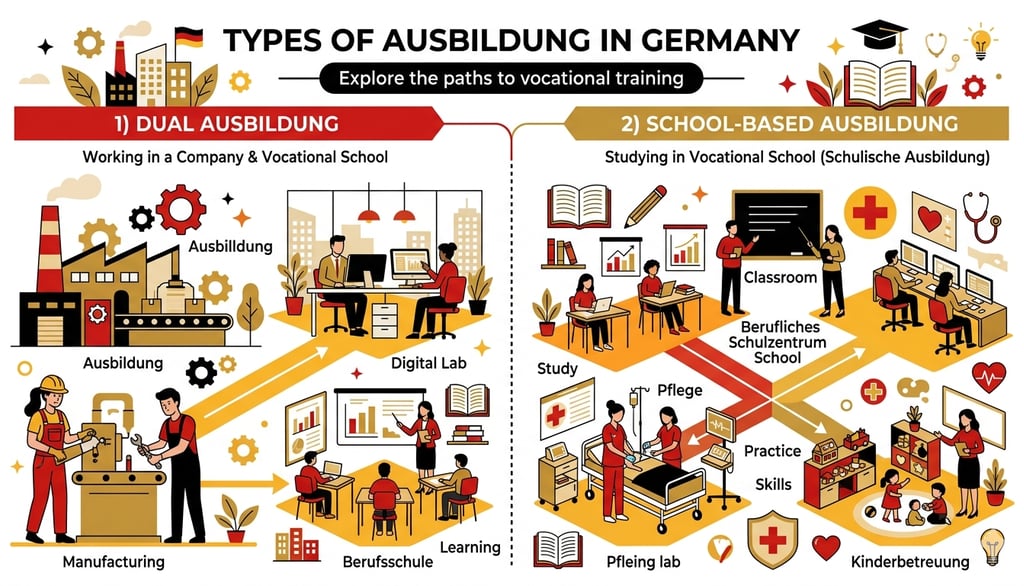
Unlike traditional degrees, Ausbildung in Germany allows students to earn money while learning a profession. This makes it an attractive option for international candidates who want both skills and financial stability during training. There are mainly two types of Ausbildung programs in Germany. Each has a different structure, learning style, and career outcome.
Unlike traditional degrees, Ausbildung in Germany allows students to earn money while learning a profession. This makes it an attractive option for international candidates who want both skills and financial stability during training. There are mainly two types of Ausbildung programs in Germany. Each has a different structure, learning style, and career outcome.
1. Dual Ausbildung (Duale Ausbildung) in Germany
Dual Ausbildung in Germany is the most common type of vocational training in Germany. It combines on-the-job training in a company with theoretical education at a vocational school (Berufsschule).
How Dual Ausbildung in Germany Works?
Students usually spend:
3–4 days per week working in a company
1–2 days studying in a vocational school
During this period, trainees receive a monthly salary, which increases each year of the program.
Duration
Most Dual Ausbildung programs last 2 to 3.5 years, depending on the profession.
Popular Dual Ausbildung Fields
Some of the most in-demand fields include:
Mechatronics
Automotive Technician
IT Specialist
Hotel Management
Industrial Mechanic
Benefits of Dual Ausbildung in Germany
Earn a monthly stipend
Gain real work experience
High chances of full-time employment after completion
Strong demand in Germany’s job market
This type of Ausbildung is ideal for students who prefer practical learning and hands-on work experience.
2. School-Based Ausbildung (Schulische Ausbildung) in Germany
The School-Based Ausbildung in Germany focuses mainly on classroom learning at a vocational school. Practical training is still included but usually happens through internships rather than company employment.
How School-Based Ausbildung in Germany Works?
Students attend a vocational school full-time where they learn both theory and practical skills related to their profession.
Unlike dual Ausbildung, students may not always receive a salary during the training period.
Duration
School-based programs usually last 2 to 3 years.
Popular Fields
This type of Ausbildung is common in professions such as:
Physiotherapy
Occupational Therapy
Medical Laboratory Assistant
Childcare and Social Work
Foreign Language Assistant
Graphic Design
Benefits of School-Based Ausbildung in Germany
Focus on specialised professional knowledge
Ideal for healthcare and social professions
Structured academic learning
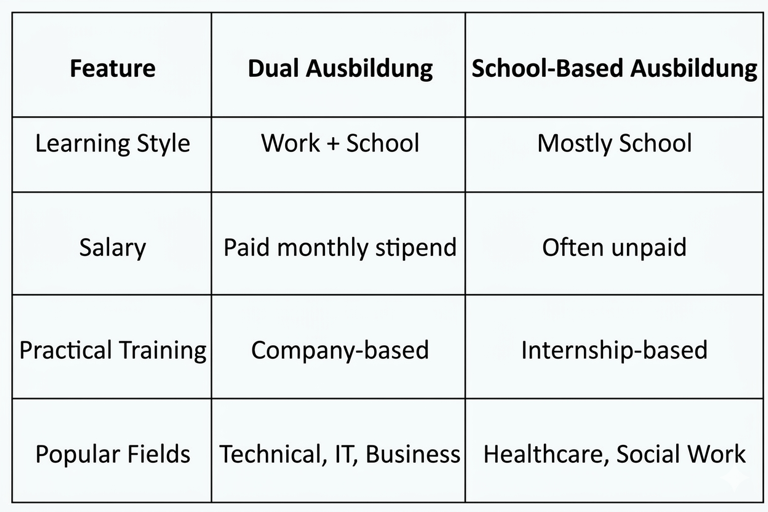
Dual vs School-Based Ausbildung: Key Differences
Which Ausbildung Type Is Best for International Students?
For most international candidates, Dual Ausbildung is the preferred option because it offers:
Monthly income
Direct work experience
Higher employment chances in Germany
However, school-based Ausbildung is better for specialised professions, especially in healthcare and therapy fields.
Final Thoughts
The Ausbildung system is one of Germany’s strongest education models. Whether you choose Dual Ausbildung or School-Based Ausbildung, both pathways provide valuable professional training and career opportunities.
For international students, Ausbildung can be a practical and affordable way to start a career in Germany while gaining internationally recognised skills.
Contact
Reach out anytime for personalized ausbildung help
Email:
© 2026. All rights reserved.