
Dual Vocational Training: Learning Skills the Smart Way
In today’s fast-changing world, education is no longer limited to classrooms and textbooks. Employers are looking for people who not only have certificates but also real skills. This is where Dual Vocational Training plays an important role.
2/27/20263 min read


Dual Vocational Training is a system where learning and working go hand in hand. Students study theory in an institute and at the same time gain practical experience by working in real industries. This model helps students become confident, skilled, and job-ready.
Let us understand this concept in a simple way.
What Is Dual Vocational Training?
Dual Vocational Training is a combination of classroom education and on-the-job training. Instead of only learning from books, students also work in real workplaces like factories, workshops, offices, or service centres.
In simple words:
One part of learning happens in a training institute
The other part happens in an industry or company
Both run together. That is why it is called “dual”.
Why Dual Vocational Training Is Important Today?
Many students complete their education but still struggle to find jobs.
The main reason is the gap between education and industry needs.
Dual Vocational Training helps close this gap.
Here’s how:
Students learn practical skills, not just theory
They understand how real workplaces function
They become ready for jobs even before completing training
This makes learning more meaningful and useful.
How Dual Vocational Training Works?
The process is very simple.
Students divide their time between:
Training institutes – where they learn concepts, safety rules, and basics
Workplaces – where they apply what they learned
For example:
A student learning electrical work studies wiring theory in class
Then practices wiring, repairs, and maintenance at a real site
This continuous cycle of learning and doing builds strong skills.
Key Benefits for Students
1. Practical Learning
Students gain real-world experience.
They do not feel lost when they start working because they already know the work.
2. Better Job Opportunities
Employers prefer candidates with hands-on experience.
Dual training students have an advantage during interviews.
3. Earn While You Learn
In many cases, students receive a stipend or allowance during training.
This helps them support themselves and their families.
4. Confidence Building
Working in real environments improves communication, discipline, and responsibility.
5. Career Clarity
Students understand early whether a particular field suits them or not.
Benefits for Industries and Employers
Dual Vocational Training is not only helpful for students. Industries also benefit a lot.
They get trained manpower
Training cost is reduced
Workers understand company culture from the beginning
Skilled workers improve productivity
This creates a win-win situation for both students and companies.
Popular Sectors Offering Dual Vocational Training
Dual training is useful across many industries. Some common sectors include:
Manufacturing
Electrical and electronics
Plumbing and sanitation
Automobile and mechanical trades
Logistics and supply chain
Retail and sales
ITI and technical trades
Healthcare support services
As industries grow, the demand for skilled professionals also increases.
Dual Vocational Training and Skill Development in India
India has a young population with huge potential.
However, skill gaps are still a major challenge.
Dual Vocational Training supports:
Skill India initiatives
Employment generation
Self-reliance
Industry-ready workforce
It aligns well with national skill development goals and vocational education programs.
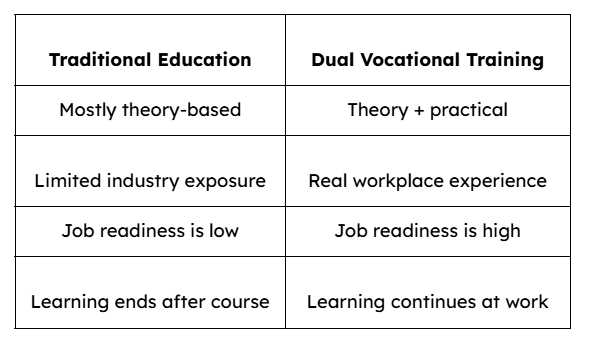
Difference Between Traditional Education and Dual Training
This shows why dual training is more effective for many careers.
Who Can Choose Dual Vocational Training?
Dual Vocational Training is suitable for:
Students who prefer practical learning
Those who want early job exposure
Learners interested in technical and skill-based careers
Students who want stable employment
It is especially useful for students who want to start earning early while learning.
Challenges and How They Are Improving
Like any system, dual training also has challenges:
Limited awareness
Fewer training partnerships in some regions
Initial adjustment for students
However, with better policies, industry participation, and awareness programs, these challenges are slowly reducing.
The Future of Dual Vocational Training
The future of work demands skilled professionals.
Dual Vocational Training will play a key role in shaping this future.
As technology and industries evolve:
Skills will matter more than degrees alone
Practical experience will become essential
Dual training models will expand across sectors
This makes dual vocational education a strong foundation for long-term careers.
Conclusion
Dual Vocational Training is a smart and practical approach to education. It prepares students for real jobs, real challenges, and real growth.
By combining learning with working, it:
Builds skills
Creates confidence
Improves employability
Supports industries
For students, industries, and the economy, dual vocational training is a step in the right direction.
Start your journey today with Go Ausbuildung in Germany—learn, work, and build a future full of skills and opportunities with Dual Vocational Training!
Contact
Reach out anytime for personalized ausbildung help
Email:
© 2026. All rights reserved.