
Ausbildung vs University in Germany: Which is better?
Germany offers some of the best education and career opportunities for international students. When planning to study or work in Germany, many students often compare Ausbildung and university education to decide which path is better
3/14/20263 min read
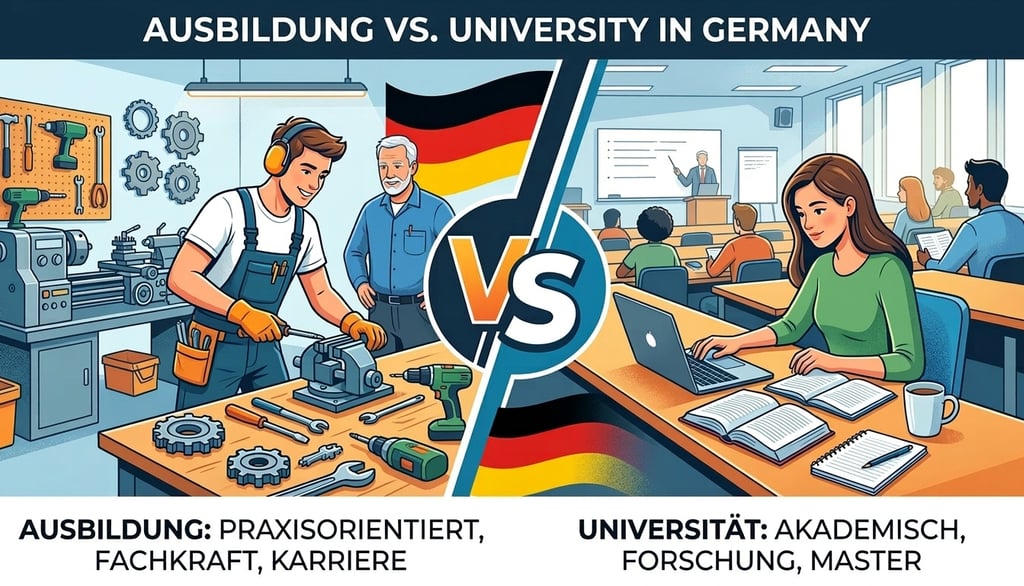
Both options provide valuable career prospects, but they follow very different approaches. While university education focuses on academic learning and theoretical knowledge, Ausbildung in Germany is designed to provide practical skills and real work experience. For many international students, especially those who want to start working quickly and gain industry experience, Ausbildung has become one of the most practical and rewarding pathways in Germany.
What Is Ausbildung in Germany?
Ausbildung is Germany’s vocational training system that prepares students for specific professions through a combination of practical work and classroom learning.
In most programs, students work in a company while also attending a vocational school. This structure is called the dual Ausbildung system, and it is widely recognised as one of the most successful vocational training models in the world.
Key Features of Ausbildung
Training duration: 2 to 3.5 years
Students receive a monthly salary
Combination of practical work and classroom education
Training provided by real companies
High chances of employment after completion
One of the biggest advantages of Ausbildung is that students earn money while learning a profession, making it financially accessible for many international students.
What Is University Education in Germany?
University education in Germany focuses mainly on academic and theoretical learning. Students study subjects in depth and gain specialised knowledge in their chosen field.
Bachelor’s programs usually take three to four years, and students often continue with a Master’s degree for further specialisation.
Although many public universities have low tuition fees, students usually do not receive a salary while studying and must cover their living expenses independently.
University education is ideal for careers that require advanced academic qualifications, such as engineering, medicine, law, or research.
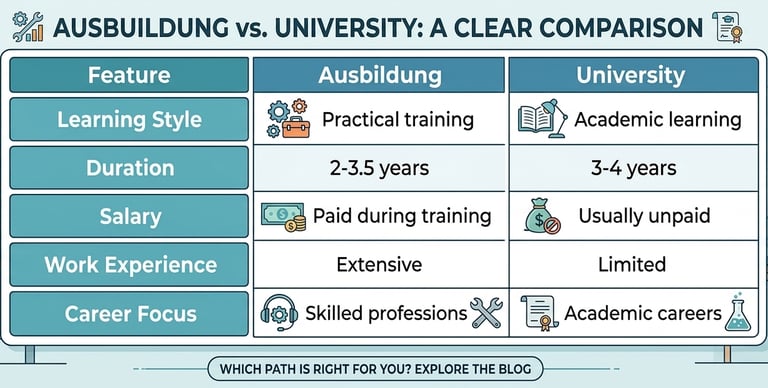
Ausbildung vs University in Germany: Key Differences
Although both education paths are respected in Germany, they differ significantly in structure and learning style.
For students who prefer hands-on learning and immediate work experience, Ausbildung often provides a more practical and direct path into the job market.
Why Ausbildung Is a Popular Choice for International Students?
In recent years, Ausbildung has gained significant popularity among international students because of its practical benefits and strong job prospects.
1. Earn While You Learn
Unlike university programs, Ausbildung allows students to receive a monthly stipend during training, which typically ranges between €800 and €1200 depending on the profession and year of training.
This financial support helps students manage living expenses while gaining professional skills.
2. High Demand for Skilled Workers
Germany faces a shortage of skilled workers in several industries, including healthcare, technical trades, and hospitality. As a result, companies actively recruit trainees through Ausbildung programs.
Many students are offered permanent jobs by their training companies after completing the program, making Ausbildung a strong pathway to employment in Germany.
3. Practical Learning Environment
Ausbildung focuses heavily on real-world work experience. Instead of spending most of the time studying theory, trainees work directly with professionals and learn practical skills required for their profession.
This approach helps students become job-ready immediately after completing their training.
4. Shorter Path to a Career
Compared to traditional university education, Ausbildung often allows students to enter the workforce faster. After completing the program, trainees already have work experience and industry knowledge.
Popular Ausbildung Fields in Germany
Germany offers more than 300 different Ausbildung professions, covering many industries.
Some of the most popular Ausbildung programs include:
IT Specialist
Mechatronics Technician
Automotive Technician
Industrial Mechanic
Hotel Management
Electronics Technician
When University May Be a Better Option?
Although Ausbildung offers many advantages, university education may still be the right choice for students who want to pursue highly specialised careers.
Fields such as:
Medicine
Engineering research
Law
Academic teaching
Scientific research
Usually require university degrees and advanced academic qualifications.
Students who enjoy theoretical learning and long-term academic development may prefer the university route.
Can Ausbildung Lead to Further Education?
Many people believe that Ausbildung limits career growth, but this is not true. In Germany, vocational training can lead to several advanced career opportunities.
After completing Ausbildung, graduates can pursue:
Meister (Master craftsman qualification)
Technician certifications
Business management qualifications
University studies in related fields
This means Ausbildung can also serve as a foundation for higher education and career advancement.
Which Option Should You Choose?
The choice between Ausbildung and university depends on your career goals, financial situation, and learning preferences.
Ausbildung may be the better choice if you:
Prefer practical training instead of academic study
Want to earn money while learning
Want to enter the workforce quickly
Are interested in technical or vocational careers
University education may be better if you:
Want to pursue research or academic careers
Plan to work in fields requiring higher degrees
Prefer theoretical learning and specialised knowledge
For many international students, especially those looking for job-oriented training and financial support during education, Ausbildung offers a highly attractive pathway.
Final Thoughts
Both Ausbildung and university education provide strong opportunities in Germany, but they serve different career goals. While universities focus on academic learning, Ausbildung emphasises practical training and real-world experience.
For students who want to gain professional skills, earn a salary during training, and secure employment quickly, Ausbildung can be one of the best options available in Germany.
With the country’s strong demand for skilled workers and well-structured vocational training system, Ausbildung continues to be an excellent pathway for building a successful career in Germany.
Contact
Reach out anytime for personalized ausbildung help
Email:
© 2026. All rights reserved.