
Is German Language Mandatory for Ausbildung in Germany?
Germany has become one of the most popular destinations for international students who want to gain practical skills and build a strong career in Europe. One of the most attractive pathways is Ausbildung in Germany, a vocational training program that combines practical work experience with classroom education. However, many students who plan to apply for Ausbildung often ask an important question: Is German language mandatory for Ausbildung in Germany?
3/6/20263 min read
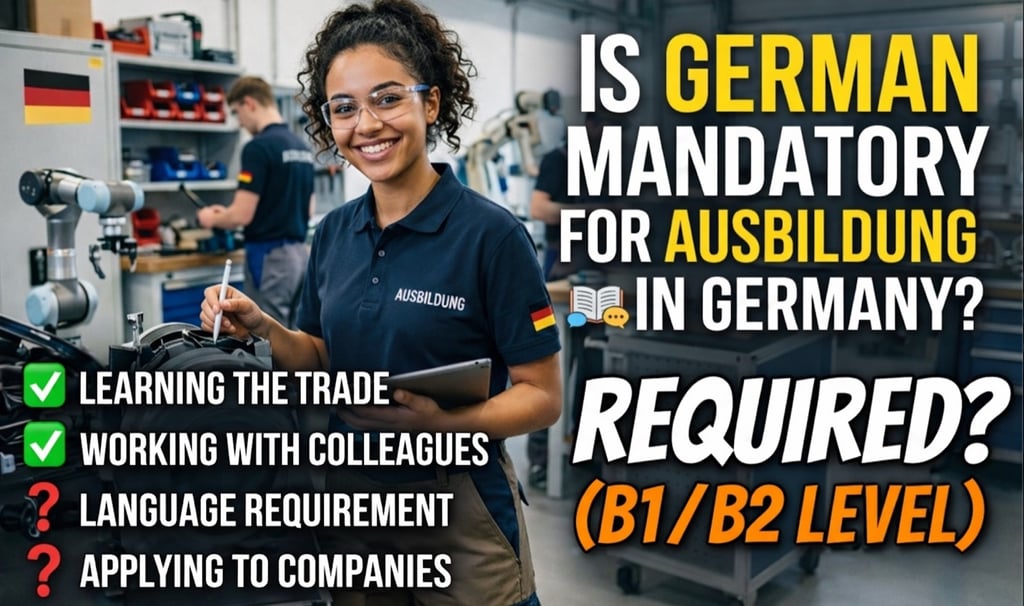
The short answer is yes, German language skills are generally required for most Ausbildung programs. Since the training involves working with companies and attending vocational schools, understanding German is essential for communication, learning, and performing daily job responsibilities.
In this guide, we will explain why German is important for Ausbildung, the required language level, and how international students can prepare before applying.
Why is the German Language Important for Ausbildung in Germany?
Unlike many university programs in Germany that offer English-taught courses, most Ausbildung programs are conducted in German. This is because trainees work directly with German colleagues, customers, and supervisors in real work environments.
During the Ausbildung program, trainees must also attend vocational school (Berufsschule) where subjects are taught in German. Understanding the language is necessary to follow lessons, complete assignments, and pass exams.
German language skills are also important for:
Communicating with coworkers and supervisors
Understanding workplace instructions
Interacting with customers
Reading training materials and manuals
Passing vocational school examinations
Because of these reasons, employers and training institutions usually expect applicants to have basic to intermediate German language proficiency.
What German Language Level Is Required for Ausbildung?
Most Ausbildung programs require a minimum German language level of B1 or B2, according to the Common European Framework of Reference for Languages (CEFR).
B1 Level German
A B1 level means you can:
Understand everyday conversations
Communicate in common workplace situations
Write simple emails and messages
Understand basic instructions
Some Ausbildung programs accept applicants with B1 level German, especially in fields where the language requirement is slightly lower.
B2 Level German
Many employers prefer candidates with B2 level German, as it demonstrates stronger communication skills.
At B2 level, you can:
Participate in professional conversations
Understand complex instructions
Communicate confidently in workplace environments
Follow vocational school lessons more easily
Having B2 German can also increase your chances of getting selected for an Ausbildung program.
Can You Do Ausbildung in Germany Without German?
In most cases, it is difficult to do Ausbildung in Germany without German language skills. Since the program involves practical work and classroom learning in German, employers usually require applicants to have at least a basic understanding of the language.
There are very few Ausbildung opportunities where English is sufficient, and these are usually limited to specific international companies.
Therefore, learning German before applying for Ausbildung is strongly recommended.
Accepted German Language Certificates for Ausbildung
When applying for Ausbildung in Germany, candidates are usually required to submit proof of their German language proficiency.
Commonly accepted German language certificates include:
Goethe-Zertifikat
TELC German Certificate
TestDaF (Test Deutsch als Fremdsprache)
DSH (Deutsche Sprachprüfung für den Hochschulzugang)
Among these, the Goethe and TELC certificates are widely accepted by employers and vocational schools for Ausbildung applications.
How Long Does It Take to Learn German for Ausbildung?
The time required to reach B1 or B2 German depends on your learning method and study intensity.
On average:
A1 to B1 level may take 6 to 8 months of regular study.
A1 to B2 level may take 8 to 12 months.
Many international students prepare for German language exams through:
Language institutes
Online courses
Intensive German training programs
Self-study with language learning apps
Consistent practice and daily exposure to the language can significantly improve learning speed.
Tips to Learn German Faster for Ausbildung
Learning a new language can be challenging, but the right approach can make the process easier and more effective.
Practice Daily
Regular practice helps improve vocabulary and pronunciation. Even 30 to 60 minutes of daily study can make a big difference.
Watch German Content
Watching German movies, TV shows, or YouTube videos can help improve listening skills and pronunciation.
Use Language Apps
Apps like language-learning platforms can help build vocabulary and grammar skills through interactive lessons.
Speak With Native Speakers
Practicing conversations with native speakers helps improve confidence and fluency.
Focus on Workplace Vocabulary
Since Ausbildung involves professional training, learning common workplace terms can be very helpful.
Benefits of Learning German for Ausbildung
Learning German does not only help you get into an Ausbildung program—it also improves your long-term career prospects in Germany.
Some key benefits include:
Better communication at the workplace
Higher chances of getting hired by companies
Improved integration into German society
Better career growth opportunities
Increased chances of staying and working in Germany after training
Strong language skills can make your Ausbildung experience smoother and more successful.
Is German Required for the Ausbildung Visa?
Yes, German language skills may also be important when applying for an Ausbildung visa for Germany.
During the visa process, applicants may be asked to provide proof of language proficiency, especially if their training program requires German communication.
Having a recognised language certificate such as B1 or B2 German can strengthen your visa application.
Final Thoughts
So, is German language mandatory for Ausbildung in Germany? In most cases, the answer is yes. Since Ausbildung involves working in a professional environment and attending vocational school, German language skills are essential for communication, learning, and career success.
Most programs require B1 or B2 German proficiency, and having a recognised language certificate significantly improves your chances of getting accepted into an Ausbildung program.
For international students planning to build a career in Germany, learning German is an important step that opens the door to better training opportunities, stronger job prospects, and long-term career growth.
With proper preparation and consistent practice, mastering the language can make your Ausbildung journey in Germany both successful and rewarding.
Contact
Reach out anytime for personalized ausbildung help
Email:
© 2026. All rights reserved.