
Cost of Living During Ausbildung in Germany
Germany has become one of the most attractive destinations for international students who want to gain practical skills and build a career in Europe. One of the most popular pathways is Ausbildung in Germany, a vocational training program that combines practical work with classroom learning. Unlike traditional university education, Ausbildung allows students to earn a monthly salary while training, which helps cover living expenses.
3/16/20263 min read
However, before starting an Ausbildung program, it is important to understand the cost of living in Germany during Ausbildung. While trainees receive a stipend, managing expenses such as accommodation, food, transportation, and health insurance is essential for maintaining a comfortable lifestyle. In this guide, we will explore the average monthly cost of living during Ausbildung in Germany, along with tips to manage your expenses effectively.
Average Cost of Living During Ausbildung in Germany
The cost of living in Germany varies depending on the city and lifestyle. Larger cities such as Munich, Frankfurt, and Hamburg tend to be more expensive, while smaller cities are usually more affordable.
On average, international trainees spend €800 to €1,100 per month to cover their basic living expenses.
Typical monthly costs include:
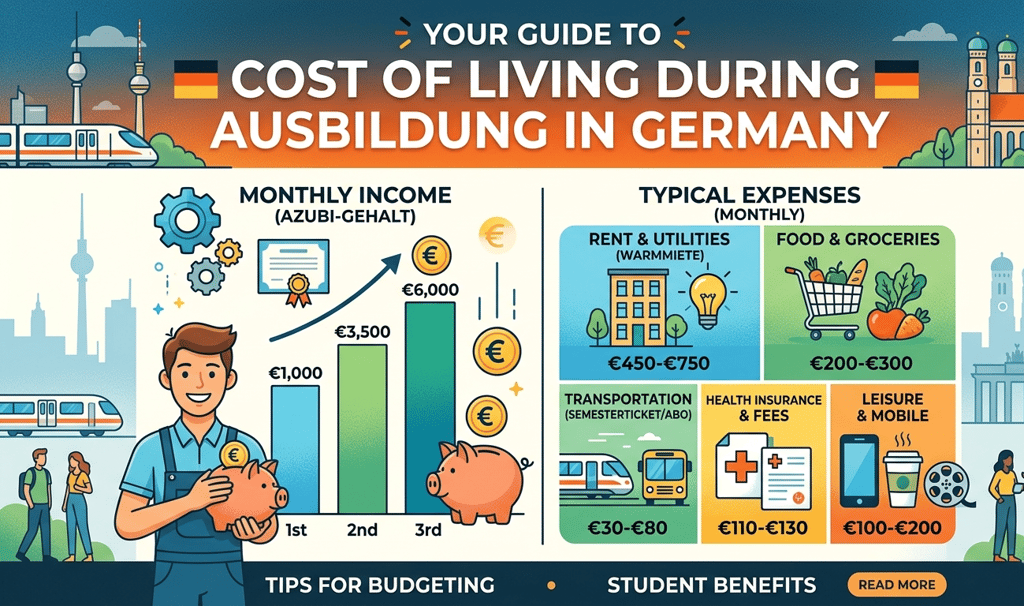
Accommodation: €300 – €600
Food and groceries: €150 – €250
Health insurance: €100 – €120
Transportation: €40 – €80
Miscellaneous expenses: €100 – €200
Since many Ausbildung programs offer a monthly stipend between €800 and €1,200, many trainees can cover most of their expenses through their training salary.
Accommodation Costs for Ausbildung Students
Accommodation is usually the largest expense during Ausbildung in Germany. The price depends mainly on the location and type of housing you choose.
Common Housing Options
Shared Apartments (WG – Wohngemeinschaft)
Shared apartments are one of the most popular options for trainees. In this arrangement, you rent a private room and share the kitchen and bathroom with other residents.
Average cost: €300 – €450 per month
Student Dormitories
Some vocational schools or training institutions offer dormitories at lower prices.
Average cost: €250 – €400 per month
Private Apartments
Renting a private apartment offers more privacy but is usually more expensive.
Average cost: €500 – €700 per month
For most international trainees, shared accommodation is the most affordable option.
Food and Grocery Expenses
Food costs in Germany are relatively affordable compared to many other European countries. Most trainees spend around €150 to €250 per month on groceries.
Cooking at home is the best way to save money. Many supermarkets such as Aldi, Lidl, and Netto offer budget-friendly grocery options.
Typical grocery expenses may include:
Fruits and vegetables
Bread and dairy products
Rice, pasta, and grains
Meat or vegetarian alternatives
Basic cooking ingredients
Eating at restaurants frequently can significantly increase your monthly expenses, so many trainees prefer cooking their own meals.
Health Insurance Costs
Health insurance is mandatory for everyone living in Germany, including trainees doing Ausbildung.
Most Ausbildung students are enrolled in public health insurance, which typically costs around €100 to €120 per month.
Health insurance covers:
Doctor visits
Hospital treatment
Prescription medications
Medical emergencies
In many cases, the employer contributes partially to the health insurance cost, which helps reduce the financial burden for trainees.
Transportation Expenses
Germany has a well-developed public transportation system that includes buses, trams, trains, and metro services.
Many trainees use public transport to travel between their workplace and vocational school.
Average transportation costs are around €40 to €80 per month, depending on the city.
Some cities offer discounted monthly tickets for students and trainees, which can significantly reduce travel expenses.
In certain Ausbildung programs, companies may also provide transport allowances or subsidised travel passes.
Additional Monthly Expenses
Apart from basic costs like accommodation and food, trainees should also consider other daily expenses.
These may include:
Mobile phone plan: €10 – €20
Internet services: €20 – €30
Clothing and personal care: €30 – €50
Entertainment and leisure: €30 – €80
On average, these miscellaneous expenses may total €100 to €200 per month, depending on your lifestyle.
Can You Live Comfortably on an Ausbildung Salary?
One of the biggest advantages of Ausbildung is that trainees earn a monthly stipend while learning. The salary usually increases each year of training.
Typical Ausbildung salary structure:
First year: €800 – €1,000 per month
Second year: €900 – €1,100 per month
Third year: €1,000 – €1,200 per month
In many cases, this stipend is enough to cover basic living expenses, especially if you live in smaller cities or share accommodation.
With careful budgeting, many trainees can manage their monthly expenses without financial stress.
Tips to Reduce Living Costs During Ausbildung in Germany
Managing expenses wisely can make your stay in Germany more comfortable. Here are some practical tips to reduce living costs during Ausbildung:
Choose Shared Accommodation
Living in a shared apartment can significantly reduce rent and utility expenses.
Cook Your Own Meals
Preparing food at home is much cheaper than eating out regularly.
Use Student or Trainee Discounts
Many public transport systems, museums, and entertainment venues offer discounted prices for students and trainees.
Track Your Monthly Budget
Keeping track of your spending helps you manage your finances and avoid unnecessary expenses.
Buy Second-Hand Items
Furniture, bicycles, and household items can often be purchased at lower prices through second-hand marketplaces.
Cost of Living in Different German Cities
Living costs can vary depending on the city where you complete your Ausbildung.
More expensive cities include:
Munich
Frankfurt
Stuttgart
Hamburg
More affordable cities include:
Leipzig
Dresden
Magdeburg
Erfurt
Choosing a city with a lower cost of living can help trainees manage their expenses more easily.
Final Thoughts
Understanding the cost of living during Ausbildung in Germany is an important step for international students planning their training journey. While expenses such as accommodation, food, and health insurance must be considered, the monthly stipend provided during Ausbildung helps cover many of these costs.
With proper budgeting and smart financial planning, trainees can live comfortably while gaining valuable professional experience. The combination of practical training, financial support, and strong career opportunities makes Ausbildung one of the most attractive pathways for building a successful future in Germany.
Contact
Reach out anytime for personalized ausbildung help
Email:
© 2026. All rights reserved.